
Introduction
Chamomile — the gentle daisy-like flower that has been part of evening tea rituals for generations.
Botanical Background
Chamomile (Matricaria chamomilla) has been treasured for centuries as a gentle herb in relaxation, evening, and digestive traditions.
Traditional Uses
Chamomile has traditionally been enjoyed for calm, bedtime rituals, and occasional stomach discomfort.
Traditional use does not establish a proven medical benefit. Clinical effectiveness requires separate verification.
Benefits & Research Context
Chamomile contains apigenin and other flavonoids studied for potential health effects. The supplied caption describes early research into relaxation and sleep while noting limited evidence for treating insomnia. No study citations or clinical conclusions were supplied.
Traditional Preparation
The supplied caption uses 1–2 teaspoons of dried, food-grade chamomile flowers in one cup of hot water for 5–10 minutes, then strains before drinking.
Faith & Rest
Matthew 11:28 is presented as an invitation for the weary to find rest in God. The reflection also makes room for rest and self-care without treating them as selfish.
Safety & Responsible Use
Avoid chamomile with a known allergy to it or related daisy-family plants. Consult a healthcare professional during pregnancy or breastfeeding and when taking medications, especially blood thinners or sedatives.
Original Herbal Wisdom Post
🌼🌿✨LET'S TALK CHAMOMILE! ✨🌿🌼 👑 ELITESWAYHERBZ — HEALING THE PEOPLE DID YOU KNOW? 🌼 Chamomile (Matricaria chamomilla) has been treasured for centuries as a gentle herb traditionally used for relaxation, rest, and digestive comfort. 🌿 BENEFITS & TRADITIONAL USES 🧘🏽♀️ Relaxation: Traditionally enjoyed to encourage calm. Early research suggests some preparations may help with anxiety symptoms. 🌙 Sleep Support: A soothing addition to bedtime routines, although evidence for treating insomnia is limited. 🌱 Digestive Comfort: Traditionally used for occasional stomach discomfort. 🛡️ Plant Compounds: Contains apigenin and other flavonoids studied for their potential health effects. 🍵 HOW TO PREPARE Steep 1–2 teaspoons of dried, food-grade chamomile flowers in 1 cup of hot water for 5–10 minutes. Strain and enjoy! ⚠️ HERBAL SAFETY: Avoid if allergic to chamomile or related plants. Check with your healthcare provider if pregnant, breastfeeding, or taking medications, especially blood thinners or sedatives. 🙏🏽 FAITH & NATURE 📖 Matthew 11:28 reminds us that God invites the weary to find rest in Him. Rest is not laziness. Caring for yourself is not selfish. 💚 📚 Featured in our upcoming EliteSwayHerbz Herbal Wellness Handbook! 👇🏽 LET'S TALK: Have you tried chamomile tea? What's your favorite way to unwind? 💚 SAVE • SHARE • LEARN • GROW #EliteSwayHerbz #HealingThePeople #Chamomile #HerbalEducation #NaturalWellness FaithAndWellness HerbalTea
Related Lessons

Day 5 · Herbal Spotlights
Ginger
An introduction to ginger root — its botanical background and its long place in kitchens and herbal traditions around the world.
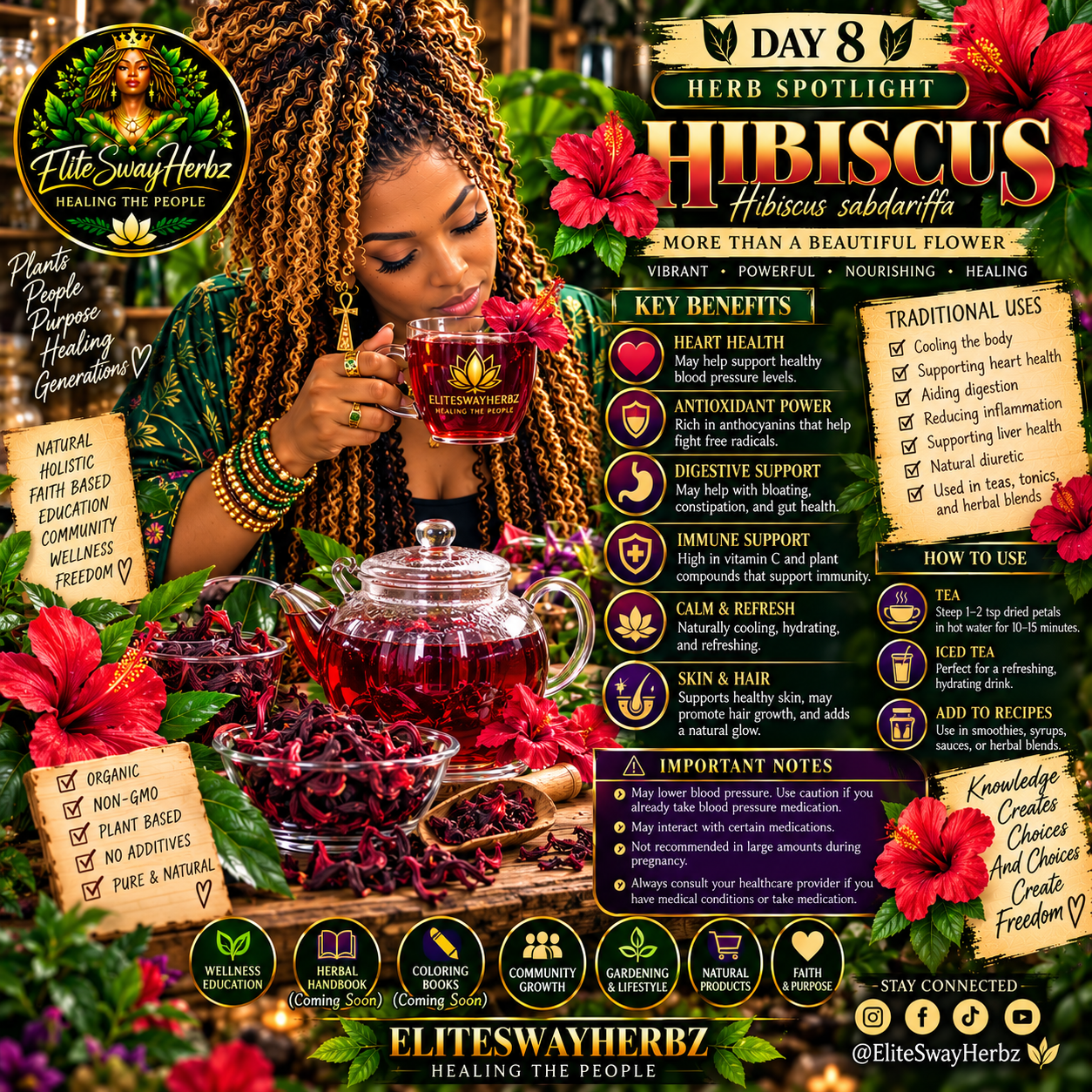
Day 8 · Herbal Spotlights
Hibiscus
Meet hibiscus — the deep crimson flower enjoyed in teas and traditional drinks across many cultures.
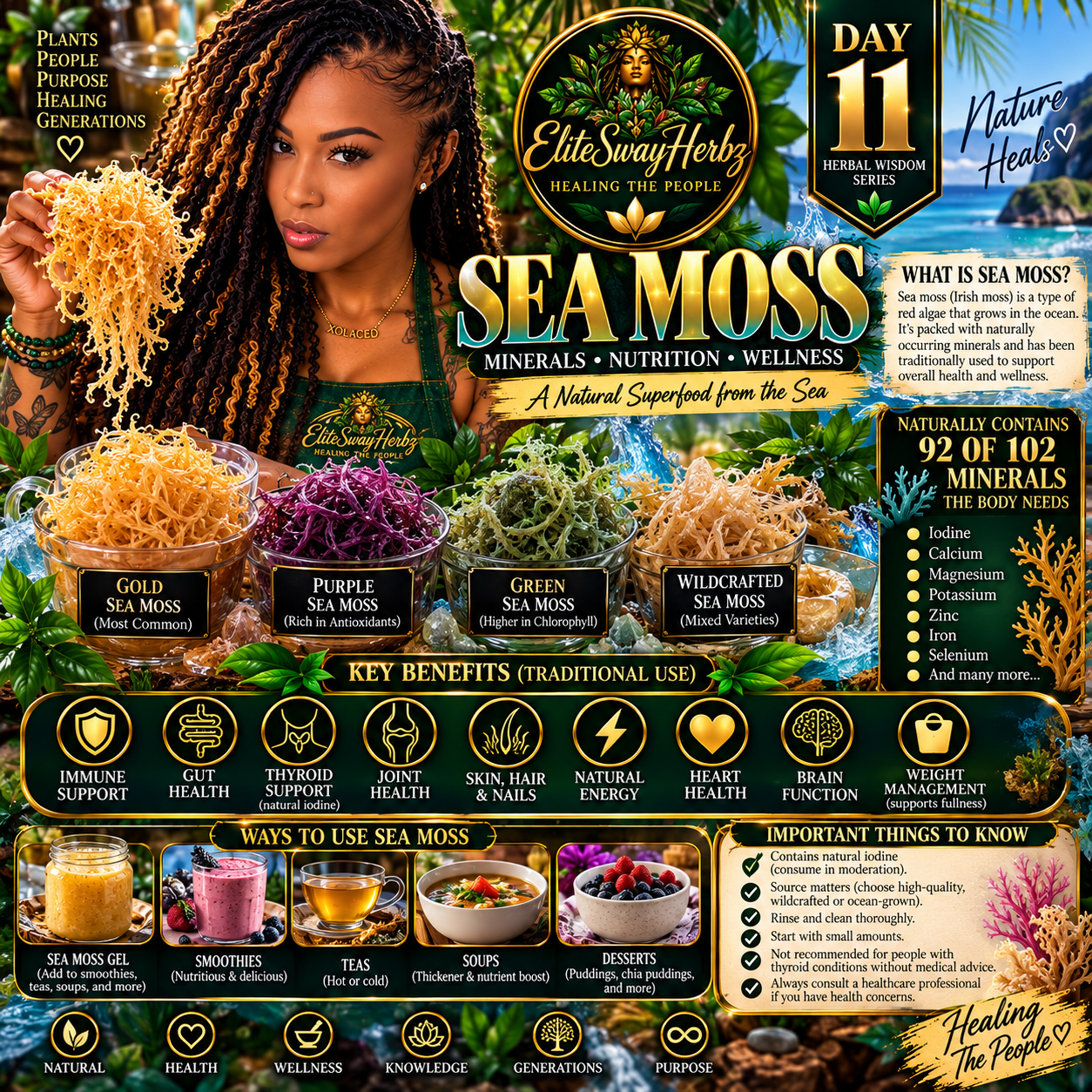
Day 11 · Herbal Spotlights
Sea Moss
An introduction to sea moss, a marine algae with a long history in coastal food traditions.