
Introduction
An introduction to the dark purple elderberry and its place in seasonal folk traditions.
Botanical Background
Elderberry (Sambucus nigra) is a dark-purple berry traditionally used during cold and flu season. It contains anthocyanins, plant pigments with antioxidant properties.
Traditional Uses
Properly prepared elderberry has a place in seasonal and respiratory wellness traditions, including syrups, teas, and extracts.
Traditional use does not establish a proven medical benefit. Clinical effectiveness requires separate verification.
Benefits & Research Context
The supplied caption describes small studies suggesting certain preparations may reduce symptom duration, while noting mixed results and the need for more research. No citations were supplied, and elderberry is not presented as prevention or treatment.
Flavorful Botanical Combinations
Ginger, cinnamon, and cloves can add warming flavors to a properly prepared elderberry beverage. A tested recipe and serving instructions have not been provided.
Safety & Responsible Use
Never consume raw or unripe elderberries, leaves, or stems; they contain compounds that can cause poisoning. Use properly processed products and consult a healthcare professional about pregnancy, breastfeeding, medications, or use in children.
Scripture Focus
Isaiah 40:31
Related Lessons

Day 5 · Herbal Spotlights
Ginger
An introduction to ginger root — its botanical background and its long place in kitchens and herbal traditions around the world.
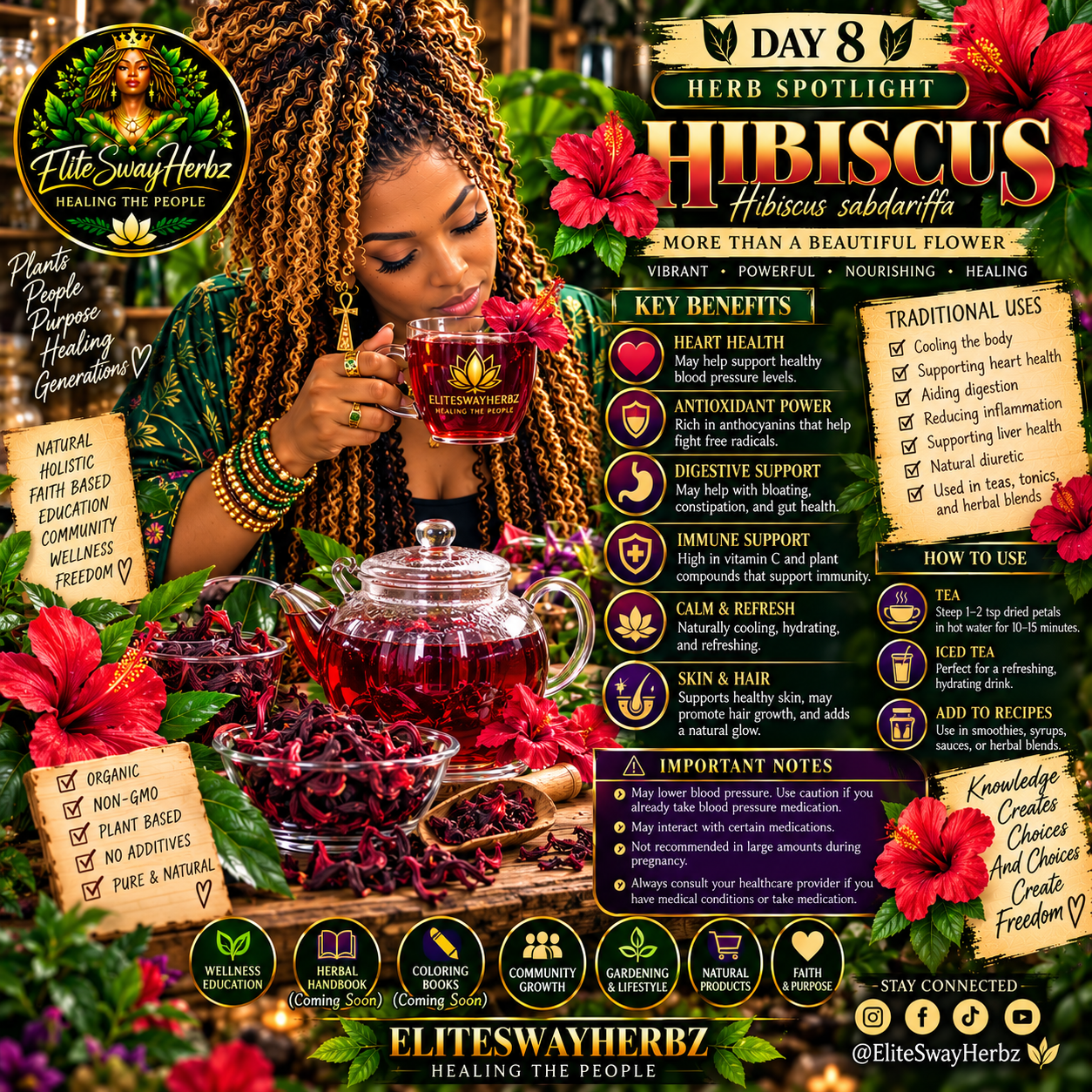
Day 8 · Herbal Spotlights
Hibiscus
Meet hibiscus — the deep crimson flower enjoyed in teas and traditional drinks across many cultures.
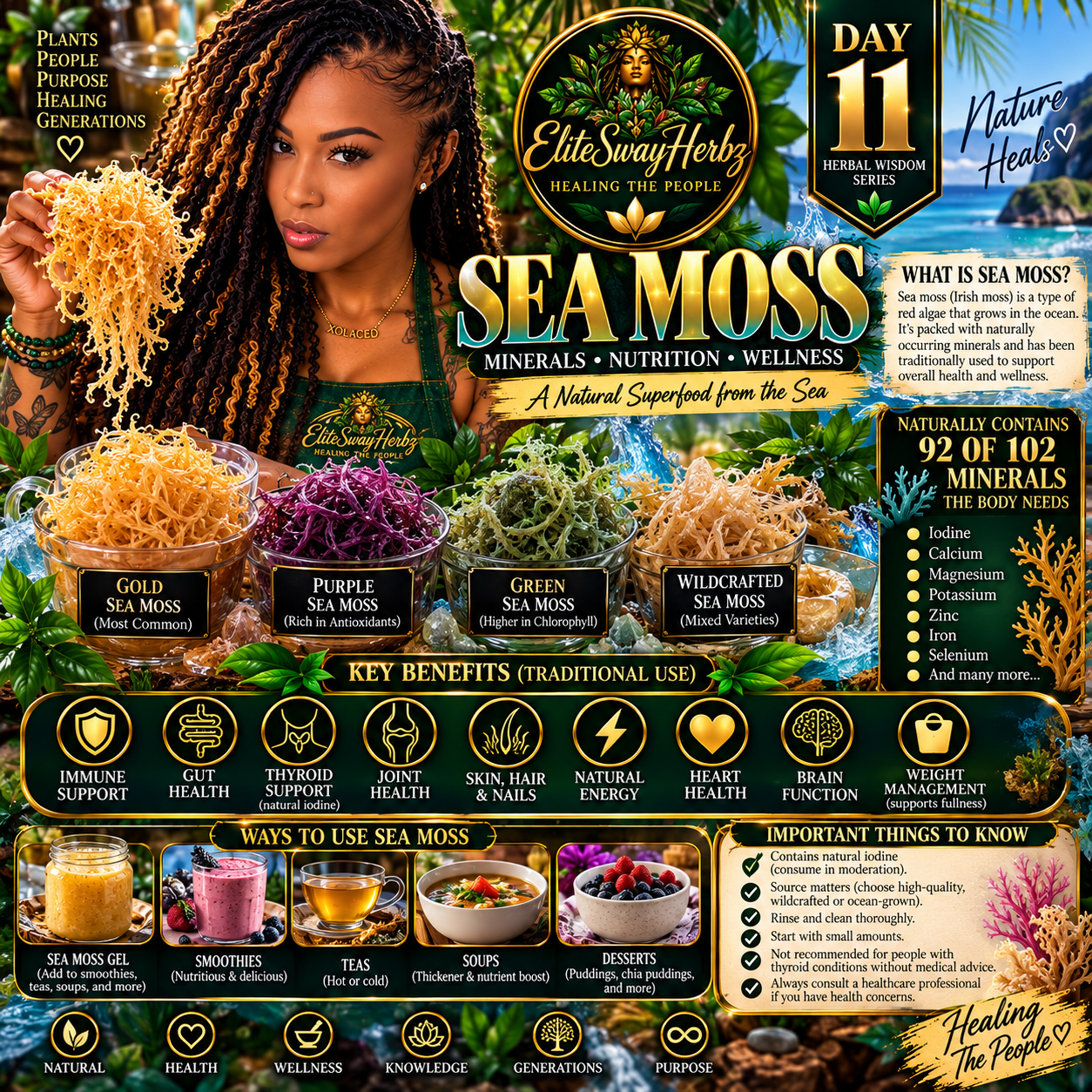
Day 11 · Herbal Spotlights
Sea Moss
An introduction to sea moss, a marine algae with a long history in coastal food traditions.